Water Butts and Rain Barrels: Choosing and Using Garden Storage
First published in 2015. Updated in October 2026 using horticultural and manufacturer guidance. The product examples are researched, not physically tested.
A water butt stores rain collected from a roof for later garden use. In the US, the same kind of small above-ground container is usually called a rain barrel. The useful choice is one you can fill, empty and maintain easily, with a secure lid, a stable base and a planned route for excess water.
Choose the position and watering job before choosing a decorative finish. A large tank squeezed behind a shed is little help if a watering can will not fit beneath its tap or you cannot reach the filter.
How much capacity will you use?
Measure the footprint, height and access space, including any stand. Then estimate demand from your own watering routine. As an illustration, a full 200-litre butt contains twenty 10-litre watering-can fills before allowing for water below the tap. That is a useful reserve for pots, not a promise to supply a whole garden through a dry summer.
Available rainfall, connected roof area, overflow and how often you empty the tank all affect the benefit. More capacity cannot collect rain that does not fall. Where space allows, linked containers can provide extra storage, but each needs proper support and a secure lid.
Compare capacities in the same units. A 50-US-gallon barrel holds about 189 litres; 50 Imperial gallons is about 227 litres. A listing that says only “gallons” needs clarification before comparison.
Plan the base, diverter and overflow together
- Base and stand: use firm, level ground and a stand approved for the full container. Water alone weighs approximately one kilogram per litre: 200 litres adds about 200kg before the container’s own weight. Do not balance a filled butt on loose or improvised supports.
- Tap clearance: try your actual watering can beneath the proposed tap height. Allow room to turn the tap and remove the can without lifting a full container awkwardly.
- Downpipe diverter: match the pipe’s shape, size and material. Check the required mounting height and whether the kit returns excess water to the downpipe when full.
- Overflow: establish where water will go in heavy rain. Keep it away from foundations, paths and neighbouring property. A full tank must not turn the downpipe into an uncontrolled spill point.
- Lid and screen: secure the lid against children and animals gaining access. Keep debris screens intact and clear; a screen is not a substitute for a safely secured opening.
Install connections according to the tank and diverter instructions, with seals suited to the fittings. Do not drill a decorative tank at an arbitrary height. After the first rain, inspect the inlet, tap, linking fittings and overflow while water is actually moving.
The RHS collection and storage guide covers gutter collection, covers, stands and linking tanks. Keep the roof and gutters reasonably clean and allow access to remove accumulated leaves.
Plastic, decorative or a reused barrel?
Compare practical details across materials: usable capacity, lid security, tap replacement, access for cleaning, the full installed footprint and winter instructions. A moulded wood-effect tank may offer the appearance you want without being a timber barrel. “Rustic” does not establish durability or water suitability.
For a reused barrel, establish its previous contents and intended new use. Avoid containers of unknown history or those used for hazardous substances. Check for leakage, secure closures and appropriate fittings. A former drinks barrel still does not make collected roof water drinking water.
Documented examples in different markets
European range: GARANTIA’s Round water butt is listed in 210-, 310- and 510-litre versions, supplied with a lid and plastic tap; matching stands are optional. Use those sizes to compare the space required, then confirm the locally supplied package and diverter. This international catalogue does not establish stock at a particular UK shop.
US example: the Good Ideas Rain Wizard Urn 50 is a 50-US-gallon plastic-resin barrel with a flat back, screened inlet and two spigots. Its overflow channel routes excess water towards the front, so the installation still needs a suitable drainage route. Its product page includes a California lead-exposure warning; review the manufacturer’s information before purchase. This is garden storage, not potable-water equipment.
The original products pictured here
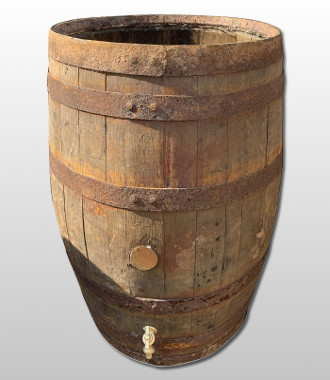
This article formerly promoted a US Master Garden rain barrel, a UK 150-litre woodgrain Polybutt and a whisky barrel. Their existing images remain below as historical illustrations, not photographs of the current examples. Current availability of those exact old listings has not been established.
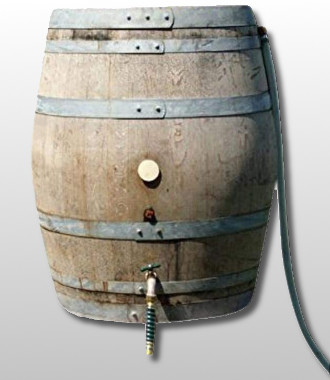
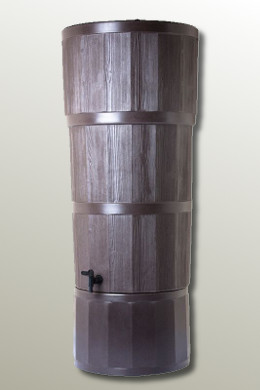
The old Water Butts Direct product destination now leads to a general water-butt category. We have removed its tracked product recommendation, along with the historic Amazon buying links. The manufacturer links above carry no affiliate tracking, and no ongoing affiliate relationship is implied.
Use collected water appropriately
Untreated stored roof runoff is not drinking water. Do not drink it, use it for food preparation or wash harvested produce with it. Roof contamination can be invisible; clear-looking water is not proof of safety.
University of Minnesota Extension recommends ornamental plants as the simplest low-risk use and warns against rain-barrel water touching edible plant parts. For herbs, salad leaves and other crops eaten raw, use potable water rather than untreated roof runoff. Keep collected water away from harvests, and consult local horticultural guidance for any food-crop use.
The RHS also advises against stored butt water for seedlings because of plant-disease risks. Apply suitable water to the root area without unnecessary splashing or fine misting. A filter or a pump does not disinfect it.
Can a water butt run an irrigation system?
Filling a can is straightforward if there is sufficient clearance and flow. Running drip irrigation is a separate compatibility question. Gravity pressure depends on the height between the water surface and outlets, and falls as the tank empties. Many tap timers and drippers require more pressure than a low stand provides.
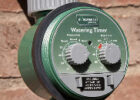
Use a system specified for low-pressure gravity operation or a properly matched tank-and-pump arrangement. Confirm the pump’s delivery at the required height and flow, its dry-run protection and suitability for the stored water. The automatic watering system guide explains that choice; the water timer guide covers controller pressure and flow checks.
Keep it usable through the seasons
Keep the lid fitted, clear inlet screens and use the stored water regularly. Reduce light entering the tank to discourage algae. Clean out sediment and inspect seals; the RHS recommends annual cleaning, and cleaning sooner if the water smells. Do not add disinfectants indiscriminately to water intended for plants.
Follow the specific tank’s winter instructions. Minnesota Extension advises emptying barrels where water may freeze, removing vulnerable fittings and maintaining a downpipe route away from the house. Disconnecting the barrel without managing the downpipe creates a new problem. Inspect the stand and connections before refilling.
If you are planning vertical vegetables in a small space, reserve room for both access and watering. Keep the edible-crop water-quality cautions above in mind; saving space does not change them.