WORX Landroid: Choosing, Using and Maintaining the Right Generation
A WORX Landroid can take over regular grass cutting, but choosing one starts with the model number and the garden it must work in. The older boundary-wire machines, camera-led Vision models and newer Vision Cloud range use different systems. An accessory or feature described for one should not be assumed to work on another.
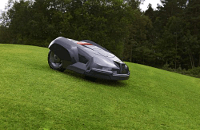
This article retains Garden Gadget Zone’s original Landroid subject and photographs. The earlier buying links pointed to a UK WR142E and a US WR150: two different mowers, not interchangeable regional names for the same specification. The guidance below separates those older machines from current options. Product information was checked in October 2026; this is documented research, not a hands-on comparison.
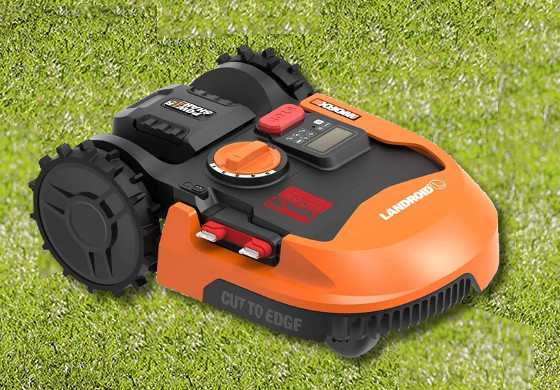
Start with the model label
The WR number matters more than an advert’s general “Landroid” description. Record the full code, including any suffix, and match the manual, power supply and replacement parts to it. If buying used, ask for a clear photograph of the identification label and the supplied charging equipment.
- UK WR142E / M700: WORX’s guide to the older range identifies this as a machine for lawns up to 700 m². It belongs to the boundary-wire generation.
- US WR150 / Landroid L: the North American support page identifies the half-acre model. Do not transfer that area rating, US charger or accessory bundle to the WR142E.
- Vision: the Vision technology page describes camera-based grass and obstacle recognition, with RFID tags for travel between areas. This is a different installation approach from a perimeter-wire mower.
- Vision Cloud: WORX’s current UK range combines stereo vision, RTK cloud positioning and visual mapping. It removes the need for a household RTK reference antenna, but still needs a charging installation and the connectivity specified for the model.
For the wider choice between navigation systems and other brands, use our robot lawn-mower guide. Here, the important question is which Landroid system you are actually buying or maintaining.
Check the garden before comparing headline capacity
Measure the grass that needs mowing, then sketch beds, trees, slopes, paths, gates and separate lawns. An area rating alone does not describe whether a mower can travel between those spaces. A small but awkward garden may require more installation planning than a larger open rectangle.
Look particularly at narrow passages, steps, ponds and raised edges. A mower that fits physically through a gap may still need more space to navigate or follow its wire. Check the model’s installation clearances and permitted slope at boundaries as well as its general working slope. The older article’s single 35% figure should not be treated as a limit for every Landroid or every part of an installation.
On boundary-wire machines, the wire defines the working area and exclusions. The manufacturer’s classic Landroid installation guide confirms that these machines need it. Optional obstacle detection does not replace a correctly designed perimeter. For a wire-free model, inspect how its own instructions handle ambiguous grass edges, neighbouring lawns and protected hazards.
Plan the charging location, suitable outdoor power, access for maintenance and the network requirements before ordering. For example, the UK Vision Cloud FAQ calls for stable Wi-Fi coverage at the charging station. “Wireless boundary” does not mean that power, setup and connectivity can be ignored.
Older Landroid accessories: useful options, not universal equipment
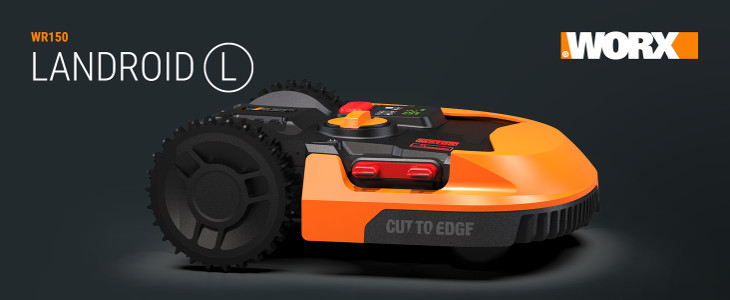
The earlier article discussed five options but sometimes described them as equipment carried by every mower. The distinction matters when comparing a bare mower, a retailer bundle and a second-hand machine.
- ACS: an optional anti-collision module for compatible machines. WORX’s ACS guidance describes operating limits, including circumstances when detection is inactive. It is not a guarantee that the mower will recognise every small object or animal.
- Off Limits: a compatible sensor and magnetic strip can create internal no-mow areas without reworking the main wire. It does not convert a classic Landroid into a mower that needs no perimeter wire. The compatibility guide lists different module versions for different model groups.
- Find My Landroid: check whether tracking hardware is actually fitted, whether the account can be transferred and what connectivity or renewal arrangements apply. Tracking is not a promise of theft prevention or recovery.
- RadioLink and voice-control options: these were part of the older accessory story. Before paying extra for either, obtain confirmation of compatibility and current support for the exact module and mower. Their mention in an old advert is not proof of present availability.
Use the current WORX options catalogue as a starting point, then check model-specific documentation. Ask which features work locally and which need an app, internet access or an ongoing service. Record any included service period and later charges in the total ownership cost; do not assume every generation has the same terms.
What regular ownership still involves
The original attraction remains sensible: frequent mowing, small clippings left on the lawn and automatic returns to the charger can reduce routine work. They do not remove garden care. Clear toys, fallen branches and other debris; inspect the cutting system and keep the charging contacts and working area in good condition according to the manual.
Allow for some separate edge trimming where the mower cannot reach. “Cut to Edge” describes a cutting arrangement, not a promise that no strip of grass remains beside every wall or raised bed. Dense fallen leaves are another job: our leaf-clearing guide explains when a rake, blower or collection tool makes sense.
Schedule mowing around use of the garden. Keep children and pets away from an operating mower. The British Hedgehog Preservation Society advises checking areas before mowing and never scheduling robotic mowers at night. Camera or obstacle-detection marketing is not a reason to disregard that advice.
Cleaning, storage and buying used
Switch off and follow the mower’s isolation procedure before handling blades or clearing a blockage. Do not assume a rain-resistant machine can be washed with a hose. The WORX classic Landroid winter guide warns against high-pressure water. Follow the instructions that match your mower and battery, particularly for cleaning and storage charge.
Store equipment in the dry, frost-free conditions specified by the manufacturer. Check battery charge at the recommended intervals and confirm app-lock behaviour before moving the mower somewhere without Wi-Fi. A household shed is not automatically a suitable battery store simply because it keeps rain off.
For a used machine, ask the seller to demonstrate starting, mowing, returning to charge and account transfer. Confirm that the PIN, correct charger, base and any paid-for modules are included. Inspect wheel wear, the cutting assembly, charging contacts and signs of water damage. Obtain the correct manual and check that replacement blades, battery and repair support are obtainable before committing.
A well-supported older Landroid may still suit a garden with a sound wire installation. A newer navigation system may suit a different layout. Choose on the fit between the garden, the exact machine and the ownership work you are prepared to do, rather than the promise of a lawn that never needs attention.